
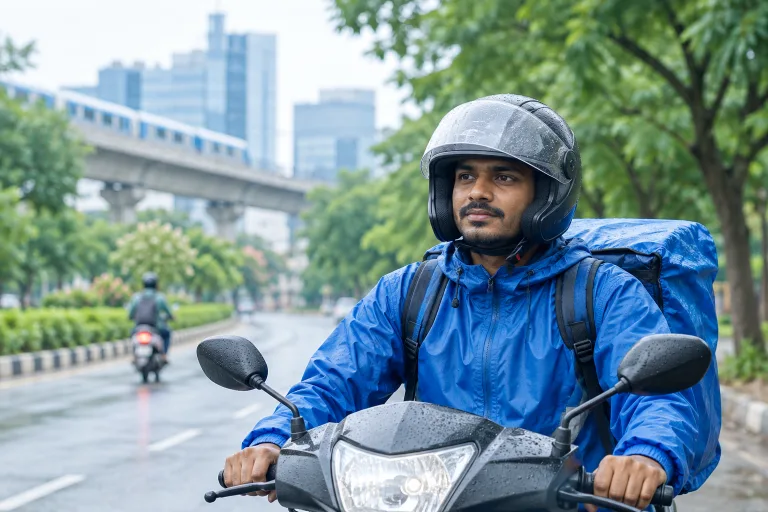
Dengue is spread by the Aedes aegypti mosquito, which breeds in clean stagnant water and bites during the daytime (Deccan Herald, 13 June 2026). That is exactly when a rider is out: at signals, outside gates, waiting near stores. The city's counts up to mid-2026 were well below 2025's, but the state's weekly count rose in July. If a fever comes with a severe headache, pain behind the eyes or aching joints, get a blood test the same day. Government hospitals test and treat dengue free of charge (The News Minute, July 2024).
2026 so far: the numbers
| Period | Where | Cases | Source |
|---|---|---|---|
| Full year 2024 | Karnataka | 32,886 (27 deaths) | NCVBDC |
| Full year 2025 | Karnataka | 7,325 | NCVBDC |
| April and May 2026 | Bengaluru | 193, against 429 in the same months of 2025 | Deccan Herald, 17 June 2026 |
| June 2026 (to mid-month) | Bengaluru | 42, against 489 in all of June 2025 | Deccan Herald, 17 June 2026 |
| May to mid-July 2026 | Bengaluru North City Corporation | 46, all isolated cases, no outbreak | Deccan Herald, 18 July 2026 |
| First three weeks of July 2026 | Karnataka, weekly | 127, then 106, then 229 | Deccan Herald, 25 July 2026 |
The national table above was updated in October 2026; the latest city counts we found in the news are from July 2026. The jump to 229 cases in the third week of July came from the state health department's data (25 July report). In June, officials put the low numbers down to work on breeding grounds and fumigation. The GBA's chief health officer said ASHA workers were visiting homes to check for stagnant water, and that Mahadevapura, a hotspot in past years, appeared to have its mosquitoes under control (17 June report).
A doctor quoted in the same June report warned that as the rains grew heavier, stagnant water in coconut shells, pots and low-lying areas could drive cases up. For what the forecasters expect from this year's northeast monsoon, see our monsoon outlook.
Symptoms that mean "test today"
The national vector-borne disease centre lists these signs of dengue fever (NCVBDC, signs and symptoms, as of October 2026):
- sudden high fever;
- severe headache at the front of the head;
- pain behind the eyes that gets worse when you move them;
- muscle and joint pain;
- loss of taste and appetite;
- a measles-like rash over the chest and arms;
- nausea and vomiting.
Go to a hospital at once if you see the signs of severe dengue on the same page: frequent vomiting (with or without blood), bleeding from the nose, mouth or gums, sleepiness or restlessness, strong thirst and a dry mouth, a fast weak pulse, or difficulty breathing.
Don't treat it yourself from a chemist's shelf. The Bengaluru North City Corporation's advice is to see a doctor straight away for high fever, severe headache, body pain, nausea or rashes, and to avoid self-medication (Deccan Herald, 18 July 2026).
Where to get tested
- Government hospitals: the first place to go with a fever. The GBA asks anyone with fever to see the doctors, health staff or ASHA workers at city corporation and government hospitals (Deccan Herald, 13 June 2026).
- Government sentinel labs: the national list of dengue sentinel surveillance hospitals for 2025 includes, in Bengaluru, the IPHL lab at CV Raman Hospital in Indiranagar, the hi-tech lab at H. Siddaiah Referral Hospital on JC Road, and the Public Health Institute (NCVBDC list, 2025). The Government of India pays for the IgM ELISA test kits these hospitals use (NCVBDC, GoI initiatives). Riders around Indiranagar have CV Raman Hospital close by.
- Your ward's Namma Clinic: a quick rapid test after a fever. A 2023 check found that a clinic's dengue test wasn't the standard IgM ELISA, so the doctor may send you on for that (Deccan Herald, 16 August 2023). More in our Namma Clinic post.
- Private labs: in July 2024 the state capped private rates at ₹300 each for the ELISA NS1 antigen and IgM antibody tests, and ₹250 for rapid card tests (The News Minute, 4 July 2024).
Cutting your bites on the road
The Bengaluru North City Corporation's July 2026 advice to residents, adapted to a working day (Deccan Herald, 18 July 2026):
- Full sleeves and repellent. Put repellent on exposed skin before the morning shift and again after a rain soaking.
- Empty anything that holds water. The corporation names tyres, coconut shells and bottles. On a delivery bike, check the storage box, the delivery bag's outer pockets and any upturned helmet left out in the rain.
- At your PG or room: empty, clean and cover water drums and buckets at least once a week, and use a mosquito net at night.
Rain-day riding itself, from waterlogged stretches to rain gear, is in our monsoon guide.
The vaccine news
In July 2026, Bengaluru doctors welcomed the Drugs Controller General of India's approval of Qdenga, a dengue vaccine given as two injections three months apart. They said it is advised for people aged 4 to 60 living in or travelling to dengue areas, and stressed that it lowers severity but doesn't fully prevent infection (Deccan Herald, 25 July 2026). Ask a doctor whether it suits you, and keep up the repellent either way.
Dengue is one part of a rider's health. For clinics, hospital OPDs and the Arogya Karnataka card, read our guide to low-cost health care in Bengaluru.
